
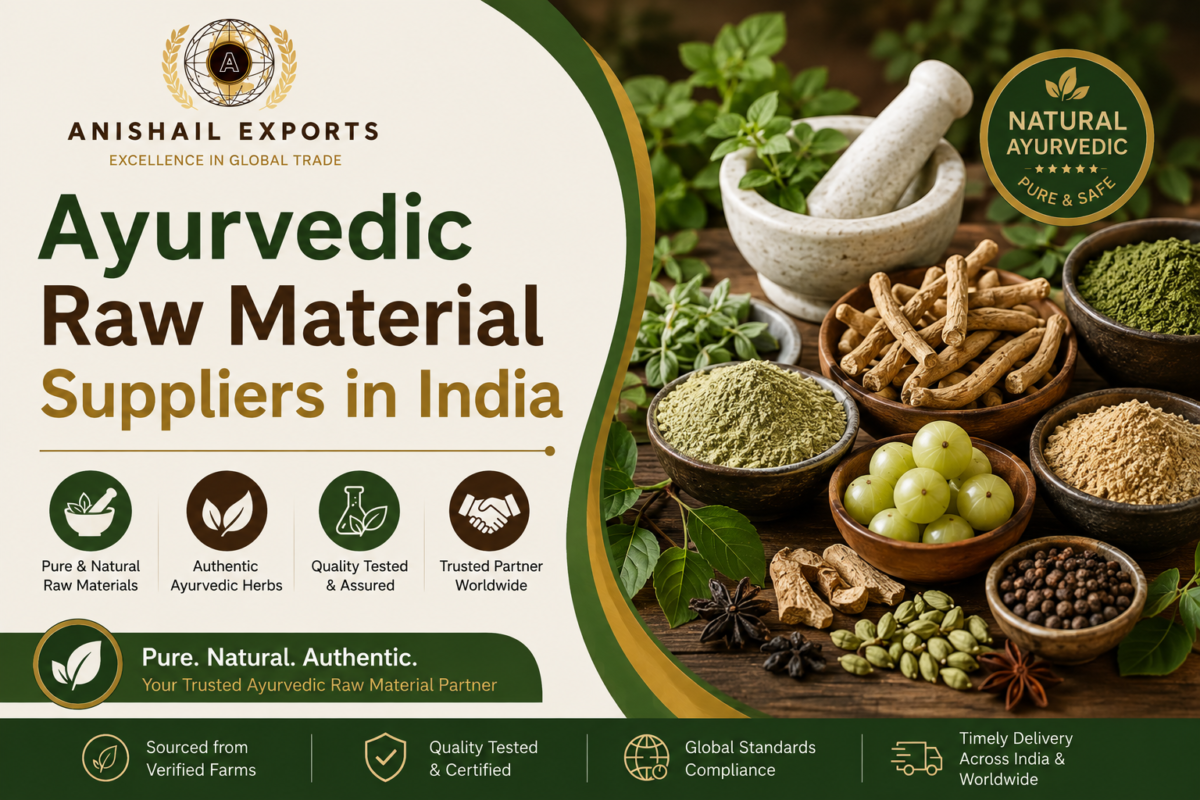
Starting a natural health business or making your own herbal products is exciting; there is no doubt about that. But finding the right Ayurvedic raw material suppliers in India is where things tend to get complicated. India is where Ayurveda comes from, so Ayurvedic raw material suppliers in India are everywhere, yet the level of care behind each one is nowhere near the same.
What you are really looking for is someone who acts like a partner rather than just another seller trying to move stock. Beyond everything, the herbs must be pure as well as clean. That comes down to a simple question: do they examine their plants for heavy metals and pesticide residue, and are those plants stored in a way that keeps them fresh and effective by the time they reach you? Here is what to look for in Ayurvedic raw material suppliers.
Things to Look for in Ayurvedic Raw Material Suppliers in India
1. Quality Testing and Certifications
Before anything else, the raw herbs need to actually be pure and safe to use. This is not a given. Plants pick up heavy metals, pesticides, mould, all sorts of things, especially when growing conditions or storage are not handled the way they should be. A supplier that knows what they are doing tests their materials in certified labs and hands over a Certificate of Analysis for every batch without you having to ask twice.
Beyond test reports, a few certifications are worth checking for as well:
- Good Manufacturing Practices (GMP) compliance.
- Quality process through ISO certification
- Approvals that are related to AYUSH
2. Sourcing Transparency and Traceability
If you can trace the process, it is really valuable information. Two things to know are the way herbs are harvested and the place from where they come. Herbal extract suppliers in India who are genuine about transparency will simply explain whether they work directly with organic farmers or source through ethical methods. There is no room for vague answers.
Full traceability comes down to a few specific things a good supplier should be able to tell you:
- Where a particular batch was grown.
- When exactly it was harvested.
- How it was processed from that point onward.
Suppliers who can answer all three consistently are the ones you can count on for steady quality order after order, without getting blindsided by a sudden drop in potency somewhere down the line. Anishail Exports is the most consistent player. Contact this Ayurvedic raw material supplier for more details.
3. Proper Storage and Processing Methods
Where the herbs grow is only half the story. What happens after they are picked matters too. You can examine the preservative after keeping the herb in a damp place or in heat. A supplier of bulk ayurvedic raw materials should know that their stuff will be cleaned, dried, and stored the right way. That is how the plant’s natural benefits stay intact until it reaches you.
Here is what to look for:
- Storage that stays cool and dry, away from direct sunlight.
- A clean facility, so nothing gets mixed in with the batch.
- Packaging that is airtight, keeping moisture out during shipping.

4. Reliable Supply and Clear Communication
None of this matters if the herbs are not there when you need them. It is frustrating to plan your work around a shipment, then find out your supplier has run out. What you want is a partner who can keep supply steady all year. They should also tell you upfront if a shortage or delay is coming, instead of leaving you to find out on your own.
A few questions can tell you a lot:
- Can they keep supply steady even when certain herbs are hard to find off-season?
- Do their minimum order sizes work for your business right now?
- Are they easy to reach and quick to respond when you have a question?
A reliable supplier is one who has enough stock planning in place to handle regular orders without unnecessary gaps. Clear communication also makes it easier to adjust production plans in case the availability changes.
5. Realistic Pricing and Adulteration Risks
Stop chasing the lowest price per kilo. It is not worth it. When a supplier’s rates sit far below what everyone else is charging, there is usually a reason. Maybe they are cutting corners. Maybe there are cheap fillers mixed in. Maybe the stock is old and past its prime. In this industry, cheap rarely means a good deal; it usually just means worthless.
A few things are worth pushing back on when the pricing looks off:
- Prices that are unusually low are a warning sign, not a bargain.
- Herbs that actually work are worth more than cheap bulk that does nothing.
- Freight, packaging, and testing fees should all be spelt out upfront, not sprung on you later.
6. Verifiable Track Record and References
Do not take a supplier’s word for it just because their pitch sounds good. There are plenty of middlemen in this space dressing themselves up as direct manufacturers. Ayurvedic raw material suppliers in India who are genuine will have a real track record with buyers who hold them to a high bar, and they will not flinch when you ask about it. Checking this properly is on you.
Before any money changes hands, it is worth doing a bit of digging:
- Talk to current buyers who can speak to their consistency over time.
- Ask for a facility walkthrough, in person or over a video call.
- Find out how they handle a bad batch or a failed test.
7. Processing Capabilities and Customisation
Buying whole dried roots does not do much good if your manufacturing setup actually calls for fine mesh powders or standardised extracts. Herbal raw material suppliers worth working with do not just hand over raw plant material and call it a day. They adapt to what your formula needs. If a vendor cannot grind, sift, or process plants the way you need them, that becomes your problem to sort out, and there is no reason it should be.
A few things are worth checking before signing on with a supplier here:
- Can they supply whole, coarse cut, powdered, or extract forms?
- Is their particle sizing precise enough that your filling equipment does not clog?
- Can they scale from small pilot batches to multi-ton orders?
A supplier who has flexible processing capabilities can offer materials just as your production process actually requires. This saves you from arranging additional processing elsewhere and keeps product development moving.
8. Clear Return Policies and Accountability
If a shipment shows up bad, you need to know who is paying for it before it ever happens, not after. Shipping mistakes are one thing, but a supplier who makes you eat the cost for mouldy or wrong plants is not someone worth sticking with. A vendor who stands behind their product takes the loss themselves when a shipment fails your lab tests.
A few things worth locking down before signing anything:
- Do they take the shipment back at their own cost if it fails testing?
- How fast do they get a replacement out the door?
- Do they actually refund you, or just offer credit toward another order?
Why Choose Anishail Exports?
Anishail Exports handles everything from industrial chemicals and food additives to herbal
extracts and specialised raw materials across multiple sectors. They keep a tight grip on quality
control, manage bulk orders smoothly, and provide genuine manufacturing support, making
them a dependable partner for businesses that need a supplier they can actually count on.
Conclusion
Picking the right Ayurvedic raw material suppliers in India comes down to three things really: consistency, transparency, and accountability. A supplier who can actually show you where their herbs come from, how they test them, and how each batch gets handled gives your products something solid to stand on. Reach Anishail Exports for the best ayurvedic raw material supply.
Take the time to compare a few suppliers before committing to a big order. Ask for their test reports. Look into what they can process. Understand how returns actually work before you need one. Confirm they can handle the volumes your business needs. A good supplier should make sourcing feel straightforward, not leave you second-guessing every shipment that shows up at your door.