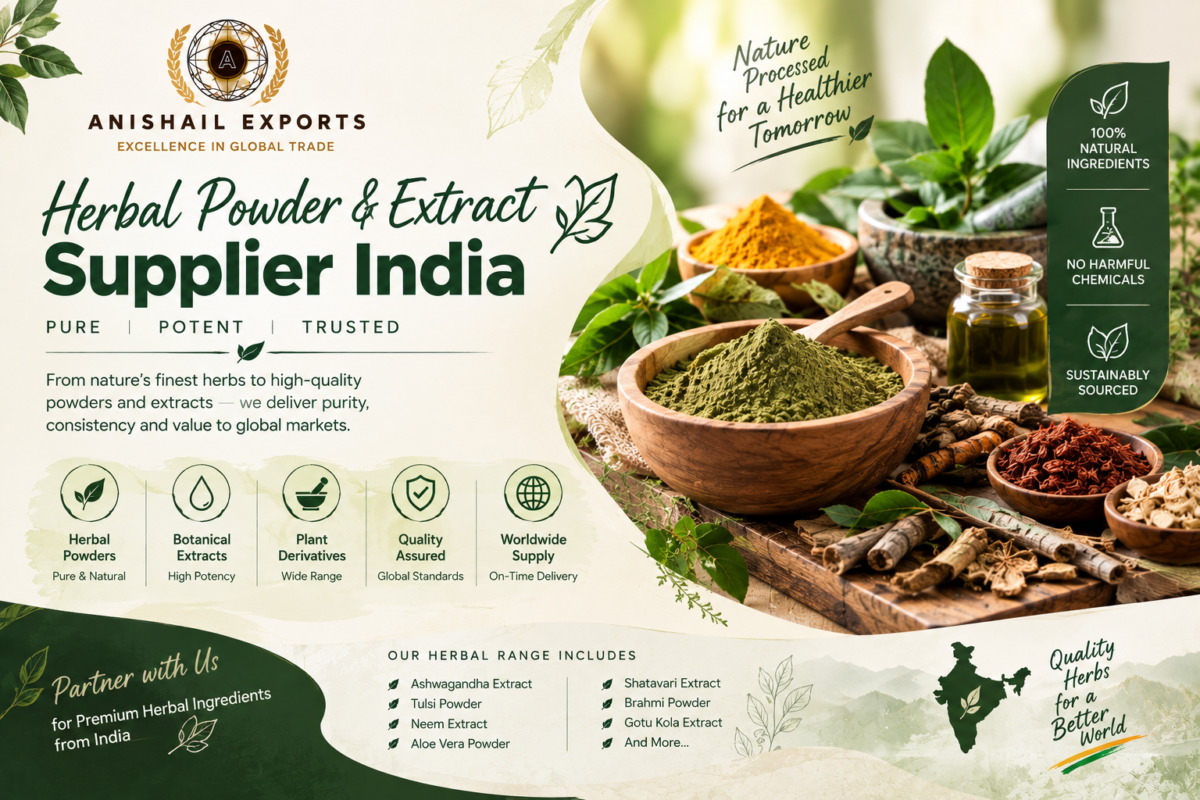
Global supplement manufacturers nowadays buy botanical ingredients overseas to cut costs and secure bulk volume. A verified herbal powder and extract supplier in India provides direct access to farming zones and processing plants. Procurement teams must run strict factory audits to block substandard shipments.
Quite often, customs agencies reject imported plant material containing heavy metals and pesticides. A compliant herbal raw material supplier runs mandatory laboratory tests on every production batch. Strict quality contracts stop non-compliant cargo from reaching international borders. Below are the things you should know about herbal powder and extract suppliers.
Core Evaluation Criteria for Overseas Botanical Procurement
1. Botanical Traceability and Cultivation Sourcing
Procuring authentic Ayurvedic herbal ingredients requires exact farm-level tracking. Processing factories must buy from specific contracted farms rather than open markets. This paper trail confirms the exact plant species and regional harvest date.
These checks establish clear traceability and confirm the identity of every botanical batch before processing.
- Field inspectors mandate microscopic identity tests before harvest authorisation.
- Supply chain logs tie raw batches directly to exact GPS farm coordinates.
- Cargo trucks undergo physical washing before loading the botanical crop.
2. Standardisation and Phytochemical Quantification
Active chemical potency shifts based on soil quality and weather patterns. A strict plant extract supplier in India locks active markers into exact percentage ranges across all batches. Laboratories run High-Performance Liquid Chromatography (HPLC) to measure this chemical output.
These controls keep active compounds within the required range:
- Lab technicians pull spectroscopic chromatograms to check specific chemical markers.
- Machine operators adjust extraction heat to standardise the final compound concentration.
- Quality control teams reject incoming crops that fail the baseline potency test.
Factory staff archive and retain samples for mandatory future reference testing. This is really important for you to know.
3. Contaminant and Heavy Metal Screening
Farm soil transfers heavy metals straight into the root systems. Buyers need physical ICP-MS test data to clear the batch. Border agents destroy shipments lacking these specific safety documents.
These tests identify chemical, microbial, and heavy metal contamination:
- ICP-MS scanners measure heavy metals down to parts-per-billion levels.
- Lab staff test incoming raw biomass for commercial pesticide residue.
- Microbiologists screen powder samples for Salmonella and E. coli strains.
- Warehouse workers isolate flagged batches inside separate quarantine zones.
Quality managers reject raw material lacking baseline chemical compliance. For the most suitable compliance during exports, reach out to Anishail Exports.
4. Facility Certifications and Quality Systems
Exporting cargo requires valid international certifications. GMP compliance forces factories to scrub floors daily and sanitise processing equipment. North American buyers demand active USFDA facility registrations.
These standards help maintain clean facilities and controlled production areas:
- Independent auditors inspect factory cleanrooms for strict GMP compliance.
- HACCP protocols block physical cross-contamination on the processing floor.
- Floor workers pass mandatory hygiene exams before entering the extraction zone.
5. Solvent Extraction Control and Residue Limits
Production lines use ethanol or chemical solvents to strip active compounds from the raw plant. The final powder must contain zero hazardous solvent residue. Supercritical carbon dioxide extraction provides a completely solvent-free manufacturing route.
The measures below help keep unwanted solvent residues within safe limits.
- Gas chromatography detects leftover chemical solvents in the finished powder.
- Engineers mandate food-grade solvents to block chemical toxicity risks.
- Factory pipe systems recover and recycle spent chemical solvents continuously.
- Lab managers test solvent purity before authorising the main extraction cycle.
6. Particle Size and Moisture Level Control
Mesh size and moisture percentages dictate factory blending speeds. Wet powder breeds mould and degrades active chemicals during ocean transit. A herbal powder and extract supplier in India must maintain tight control over moisture and particle size. Spray-drying machines output exact particle sizes with near-zero moisture retention.
These checks maintain consistent powder quality:
- Climate-controlled storage blocks ambient moisture from ruining the finished powder.
- Sizing screens lock in powder density for automated capsule-filling machines.
- Workers seal materials immediately after milling to stop air exposure.
7. Documentation and Certificate of Analysis Verification
International freight requires a laboratory Certificate of Analysis (CoA). This document records exact chemical markers and contaminant levels for that specific drum. Buyers match these lab numbers against their internal purchase specifications.
These records provide batch-level evidence of quality:
- Third-party laboratories audit internal factory test results before export approval.
- Safety Data Sheets accompany all cargo to direct industrial warehouse handling.
- Batch records log the exact time of extraction, milling, and final packaging.
- Quality managers sign the physical release forms before truck loading begins.
8. Supply Chain Stability and Commercial Packaging
Heat and oxygen destroy botanical extracts during ocean transit. Factories seal powders inside aluminium foil bags and heavy drum liners. Procurement contracts must dictate exact packaging formats to prevent cargo spoilage.
Knowing these packaging and transport controls is crucial:
- Vacuum-sealed foil barrier bags block ambient humidity and UV light.
- Nitrogen gas flushing pushes ambient oxygen out of the commercial drum.
- Logistics teams pull temperature data logs from the maritime shipping containers.
9. Regulatory Compliance and Import Documentation
Border authorities cross-check botanical shipments against supplier paperwork at the port. One mismatched code or absent certificate stops a consignment from clearing. Days turn into weeks before the cargo moves again. Procurement teams carry the responsibility of collecting every required document from the supplier. That review needs to happen before the shipment departs, not after it arrives at the border.
Knowing these documentation requirements is crucial:
- Certificates of Analysis must match active compound percentages listed on the purchase order.
- Phytosanitary certificates confirm government inspection at the country of harvest.
- Harmonised System codes need to match the correct botanical extract category at customs.
10. Supplier Auditing and Facility Verification
Documents submitted by a supplier do not always reflect what happens during actual production. Procurement teams that skip facility verification inherit quality problems that only surface after the shipment arrives. An on-site audit or a commissioned third-party inspection catches these gaps before a contract is signed.
Knowing these verification steps is crucial:
- Good Manufacturing Practice certificates confirm documented hygiene and processing controls at the facility.
- Batch production records show extraction temperatures and solvent quantities used per production run.
- Third-party inspectors verify raw material storage conditions and humidity monitoring on-site.
Why Choose Anishail Exports?
Anishail Exports handles everything from industrial chemicals and food additives to herbal
extracts and specialised raw materials across multiple sectors. They keep a tight grip on quality
control, manage bulk orders smoothly, and provide genuine manufacturing support, making
them a dependable partner for businesses that need a supplier they can actually count on.
Final Thoughts
Bulk botanical procurement demands hard facility audits and verified laboratory hardware. Buyers cannot rely on basic pricing sheets to guarantee material safety. Inspecting factory machinery and quality control systems prevents sudden supply chain failures. Contact Anishail Exports and avoid such failures. It is a trusted herbal powder and extract supplier in India.
Signed commercial contracts secure fixed pricing and raw material volume. Border agencies constantly update import testing regulations for dietary supplements. Strict vendor auditing remains the only viable method to block bad botanical cargo. This makes supplier screening and quality checks part of the procurement process.