Factories stop running when raw materials arrive late. Plant managers face constant pressure to maintain tight production schedules. Sourcing base ingredients from reliable industrial chemical suppliers in India prevents these sudden operational halts. A single contaminated delivery easily ruins an entire week of output.
The current manufacturing market contains hundreds of competing chemical processors. Finding dependable chemical suppliers requires physical site audits rather than just reading marketing brochures. Procurement teams must look past the initial price per tonne. True supply stability depends entirely on strict testing protocols and proper logistics.
10 Ways to Vet Quality and Sourcing of Reliable Chemical Supply Partners
1. Verifying Manufacturing Standards
Buyers must inspect the actual processing units during a site visit. You cannot rely on printed certificates alone. Review the daily batch records to confirm the quoted purity levels hold up over time. A facility ignoring basic environmental rules will eventually face sudden government closure.
Check these things for industrial chemical suppliers in India:
- Check the calibration logs for all internal laboratory equipment.
- Trace the exact origin point of their raw base compounds.
- Search public records for past factory suspensions.
These checks help confirm whether the supplier maintains consistent manufacturing standards rather than relying only on paperwork.
2. Assessing Storage Infrastructure
Base compounds break down quickly inside damp warehouses. You must evaluate the roof integrity and climate control systems before signing a contract. Sensitive powders absorb moisture rapidly without strict humidity management. Warehouses lacking clear physical walls between reactive agents risk catastrophic cross-contamination.
Review these storage conditions to make sure the chemicals remain safe and stable:
- Inspect the roof vents in the main holding areas.
- Confirm hard physical barriers separate conflicting reactive materials.
- Read the monthly pest control and moisture logs.
3. Logistics and Fleet Capabilities
Moving hazardous liquids across state borders requires specialist transport networks. Established industrial chemical distributors in India run their own dedicated tanker fleets to maintain chain-of-custody. Hiring random third-party trucks introduces severe risks regarding unauthorised offloading. Dedicated transport ensures the factory floor receives material exactly when scheduled.
Check these transport and delivery facilities before placing large chemical orders:
- Demand physical proof of driver hazardous material licenses.
- Test the live GPS tracking feeds on active delivery trucks.
- Review the highway spill response manual.
4. Evaluating Purity and Lab Testing
Independent lab testing separates legitimate manufacturers from cheap mixing sheds. Procurement officers must verify the internal Certificate of Analysis against outside laboratory data. Trusting in-house reports alone leaves your final product vulnerable to systemic quality failures. A vendor blocking external lab access usually hides low-grade base ingredients.
For purity and Lab testing, ensure these from chemical suppliers in India:
- Set a strict limit for heavy metal trace contamination.
- Match specific lot numbers directly to third-party lab dates.
- Run random sample checks at your own receiving bay.
Independent verification gives buyers greater confidence that the material supplied matches the required quality specifications.
5. Sourcing Volume Capabilities
Production lines often speed up drastically during seasonal peaks. Securing bulk industrial chemicals in India demands a manufacturer who can double output without compromising purity. Small operators fail under sudden volume pressure and leave your machines idle. Signing with a high-capacity plant keeps your factory running during major market spikes.
Assess these production and supply capabilities before committing to bulk requirements:
- Audit the maximum monthly tonnage limit of their primary site.
- Count the physical raw material buffer stock held on site.
- Establish a priority dispatch rule for emergency demand spikes.
6. Packaging and Container Standards
Weak plastic drums crack open during rough highway transit. You must physically inspect the packaging grades to stop atmospheric oxygen exposure. High-density polymer containers prevent corrosive acids from eating through the sides. Vendors washing and reusing old drums put your warehouse staff in direct physical danger.
Inspect these packaging standards to reduce the risk of damage during transportation:
- Measure the wall thickness of the standard delivery drums.
- Check for unbroken tamper seals on every arriving container.
- Request the certified drop-test results for their packaging units.
Anishail Exports has the best container and packaging standards. It can be your reliable export partner over others.
7. Financial Stability and Credit Terms
Financially weak vendors collapse without warning and disrupt your supply chain. Checking a partner’s bank standing protects your production pipeline from unexpected bankruptcy delays. Good credit terms allow you to keep working capital inside your own factory. Suppliers begging for heavy upfront cash usually suffer from severe internal debt issues.
Review these financial factors before entering a long-term supply agreement:
- Read the audited financial statements from the past three years.
- Push for extended payment windows tied to high-volume orders.
- Check their standing with major raw material creditors.
8. Regulatory Compliance and Documentation
Government inspectors frequently close plants found using banned or restricted compounds. Checking the compliance paperwork keeps your own company safe from legal action. Every single truck must arrive carrying exact safety data sheets and updated transit manifests. Missing paperwork at the factory gate instantly stalls offloading.
Verify these compliance documents before receiving chemicals at your facility:
- Validate local pollution control board clearance certificates.
- Match all Safety Data Sheets against current global standards.
- Track their toxic waste disposal manifests.
Complete and current documentation helps prevent avoidable delays and supports compliance throughout the supply chain.
9. Emergency Support and Response Times
Accidental spills demand immediate technical advice from the manufacturer. Fast emergency response times dictate how quickly your site recovers from a chemical incident. Vendors operating without a dedicated technical contact leave your safety officers guessing. Direct access to a support team provides exact neutralisation steps during a crisis.
Check these emergency support measures to understand how quickly the supplier can respond:
- Call their emergency hotline to test the actual response time.
- Request the written protocol for on-site spill containment.
- Map out the product recall and replacement logistics timeline.
10. Transparency in Pricing and Cost Structures
Base material prices shift constantly alongside oil benchmarks and exchange rates. Unscrupulous suppliers fix their rates during market drops to keep extra profits instead of adjusting contract costs. Demand contracts indexed directly to transparent public market benchmarks. This prevents surprise surcharge invoices and keeps your quarterly purchasing budgets accurate.
Review these pricing details to understand the actual cost of your chemical supply:
- Link monthly billing directly to public market commodity indexes.
- Require itemised quotes separating freight charges from base chemical rates.
- Put strict price adjustment triggers into your supply contracts.
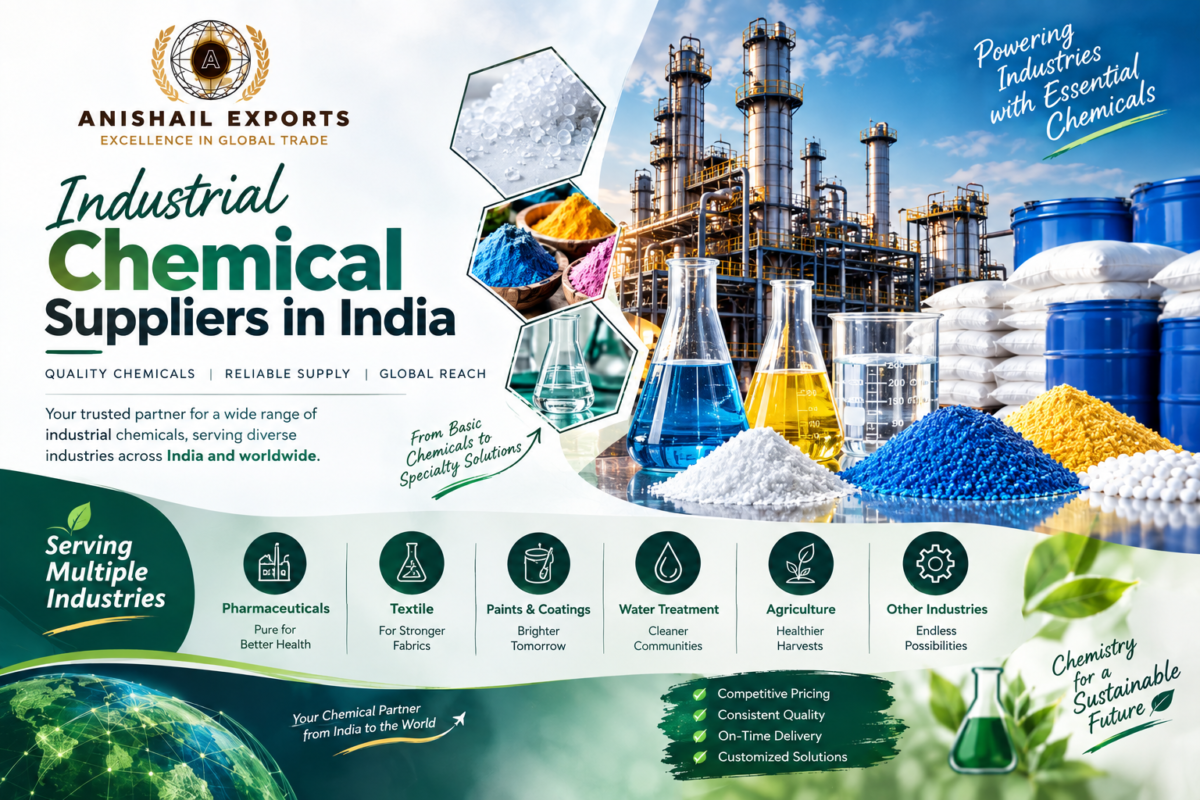
Why Choose Anishail Exports?
Anishail Exports handles everything from industrial chemicals and food additives to herbal
extracts and specialised raw materials across multiple sectors. They keep a tight grip on quality
control, manage bulk orders smoothly, and provide genuine manufacturing support, making
them a dependable partner for businesses that need a supplier they can actually count on.
Final Thoughts
Protecting a manufacturing schedule requires aggressive vetting of every single vendor. Industrial chemical suppliers in India should be evaluated with the same level of scrutiny. Taking the lowest bid almost always damages the final product and introduces heavy site risks. Factory owners secure their output by forcing total transparency around storage, testing, and transport.
A vetted supply partner like Anishail Exports functions exactly like an extension of your own plant. Your factory output relies completely on what arrives at the receiving bay. Physical site audits and independent lab tests filter out vendors with poor processing habits. Signing contracts exclusively with proven operators keeps daily production running on schedule. Finally, consistent material sourcing builds market trust and defends your operating margins.