
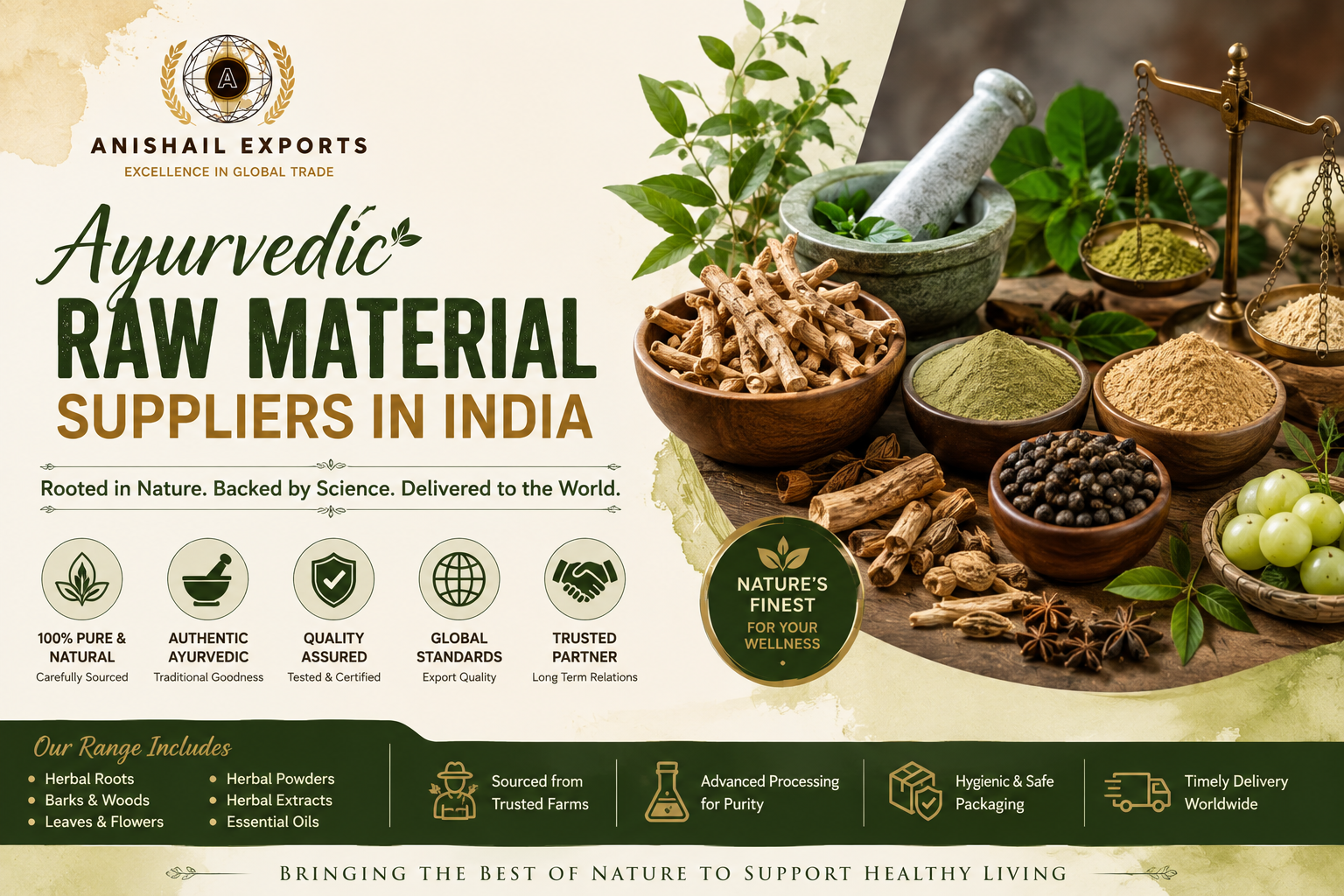
Securing bulk ayurvedic materials is never just about finding a supplier and locking in a rate. Raw plant potency is notoriously inconsistent. The exact same root harvested a month late or stored in a humid shed will yield drastically lower active compounds. Ayurvedic raw material suppliers in India are always needed.
Relying solely on vendor certificates is how manufacturers end up with production floors full of mouldy or heavy-metal-contaminated stock. Put your absolute limits for moisture and microbial counts directly into the purchase order. Hold the actual payment until an independent lab verifies the pre-shipment sample against those exact numbers. Below is what to check before buying ayurvedic raw materials.
What to Check Before Buying Ayurvedic Raw Materials
1. Know the Exact Material You Need
Stop ordering strictly by local market names. Vendors constantly mix up regional species, or they’ll ship you powdered bark when your extraction tanks are calibrated specifically for whole leaves. Receiving the wrong physical format doesn’t just cause a delay—it completely stalls the production line. Kill the guesswork upfront.
The breakdown that should be given to a supplier:
- Local or trade name.
- Specific parts of the plant.
- Physical state like liquid extract or powder.
- Lab spec with minimum grade.
2. Ask Where the Material Comes From
Geography directly dictates plant quality. The exact same herb grown in a different soil profile will completely throw off your manufacturing consistency. If you expect standardised production runs month after month, you have to map the material’s exact journey long before it hits the vendor’s warehouse. Refuse to do business with Indian suppliers who just slap a botanical name and a price tag on an invoice. Demand a hard paper trail.
Before clearing a new vendor, make them hand over:
- The specific state or geographic growing region.
- Exact harvest timelines, not just the year.
- Dedicated batch and lot tracking numbers.
- Details on how the raw material was dried and processed.
- Full traceability records from the farm straight to their facility.
3. Ask for Test Reports
Looking clean means absolutely nothing. A visual check won’t expose heavy metals, microbial spikes, or diluted active compounds. You have to run targeted lab tests based on exactly what that botanical will be used for.
Never accept a generic, six-month-old test report from a supplier. Demand paperwork directly tied to the exact batch they are shipping you today. If you buy on a regular schedule, every single delivery requires fresh documentation:
- Certificate of Analysis (CoA) matched to the current batch.
- Physical property breakdowns (moisture and ash levels).
- Microbial load counts.
- Heavy metal screenings.
- Pesticide residue panels.
4. Check the Supplier’s Quality Practices
A raw plant is easily ruined on the factory floor long before it ships. Poor washing leaves soil pathogens behind, while rushed drying bakes out the active compounds. If a vendor dodges specific questions about their grinding or extraction setup, walk away entirely.
This is exactly why you must demand their paperwork. When vetting herbal ingredients manufacturers in India, a verbal promise of quality means nothing without an established paper trail. You need hard proof of how they operate behind closed doors. Do not sign anything until they hand over:
The actual step-by-step quality control protocols are:
- Real batch records from past runs, not just blank templates.
- Specific details on their milling and extraction equipment.
- Their third-party lab testing agreements.
- Proof of current GMP (Good Manufacturing Practice) compliance.
5. Check Storage and Packing
Heat, dampness, and bugs can ruin raw herbs quickly. You can source from reliable ayurvedic herbs suppliers in India, but poor storage or cheap packaging can still damage the material before it reaches you. Ask the supplier exactly where the material is stored and how it is packed for dispatch.
Check that they guarantee:
- Clean, bone-dry storage.
- Packaging suited for that specific herb.
- Strict pest and moisture control.
- Clear batch labels on everything.
6. Look for Batch-to-Batch Consistency
One good delivery is not enough when you need the same ingredient regularly. Raw materials can vary because of changes in source, harvest, drying, processing, and storage. These differences may show up when the material is used in production. Discuss the specifications with the supplier before starting regular purchases. Keeping the same requirements for future orders makes it easier to compare batches and spot a change in quality.
These points should remain consistent with every batch:
- Fixed product specifications.
- Batch-wise testing.
- Consistent processing.
- Comparison with earlier batches.
- Defined acceptance limits.
7. Check Whether They Can Handle Your Quantity
The supplier may have the material you need but may not be able to supply your required quantity on a regular basis. This can become a problem when production depends on a steady supply. Ask about stock levels and whether larger orders can be managed without changing the agreed quality.
It is also useful to discuss your expected order pattern before finalising the supplier. Natural raw materials suppliers should be able to tell you about minimum quantities, supply frequency, and normal dispatch timelines.
Make sure the supplier can provide:
- Minimum order quantity.
- Available stock.
- Bulk supply capacity.
- Regular order capacity.
- Expected lead time.
8. Compare More Than the Price
A low price can look attractive until you compare what is included. One supplier may offer tested material with proper packing and batch documents, while another may quote less but provide fewer details. The cheaper option may not be the better purchase if the material does not meet your requirements.
Compare the product, documents, source, packing, testing, and supply terms along with the price. This gives you a better basis for deciding which supplier is right for regular procurement.
Test these things when comparing the price:
- Material quality.
- Test reports.
- Source information.
- Packing and storage.
- Final price and supply terms.
Why Choose Anishail Exports?
Anishail Exports handles everything from food additives and industrial chemicals to herbal
extracts and specialised raw materials across multiple sectors. They keep a tight grip on quality
control, manage bulk orders smoothly, and provide genuine manufacturing support, making
them a dependable partner for businesses that require a supplier they can actually count on.
Conclusion
Good raw material sourcing starts with knowing exactly what you are buying. Ayurvedic raw material suppliers in India should be able to provide clear details about the plant identity, form, source, test results, storage, packing, batch consistency, and supply capacity before you place a regular order. Checking these details early can help prevent quality issues later.
Do not make the decision on price alone. Compare suppliers on the quality of the material, the information they provide, and their ability to meet your requirements over time. Reach Anishail Exports today for the most dependable supply. A clear discussion before the first bulk order gives you a better idea of whether the supplier is suitable for your needs.